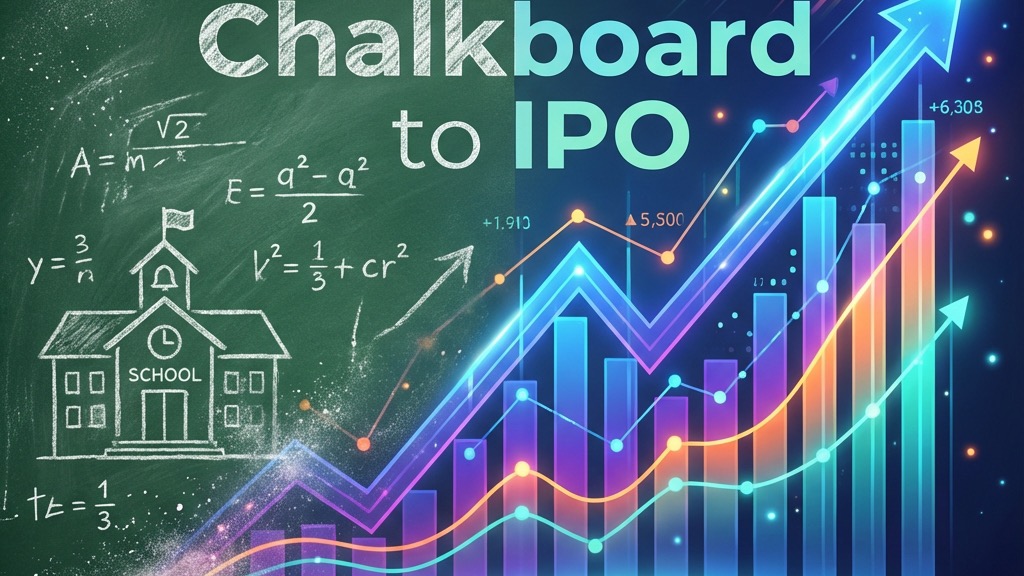
From chalkboard to IPO: the founder decisions behind PhysicsWallah
A founder view of the bet: free trust-first content, low pricing, a fast hybrid pivot, and the choice to go public as a growth gate.
I started with a camera, a whiteboard, and a simple promise: explain physics in plain language for students who could not afford premium coaching. The goal was not scale. It was access. But that choice shaped everything that followed.
India’s education market is huge, but the real action sits in test prep. It is a category where one great teacher can change a student’s outcome, and where trust travels fast through word of mouth. The first decision was to build a trust engine before building a business.
Decision 1: Build trust before revenue
We made the lectures free, consistent, and in the language students actually used. That created a habit loop. Millions watched, and when we launched the app, the community came with us. We did not buy distribution. We earned it.
Decision 2: Price for access, not margins
The courses were priced for families in tier 2 and tier 3 cities. While competitors charged tens of thousands, we kept the entry point under a thousand. It was a bet that volume and goodwill would beat short-term profit.
Decision 3: Go hybrid when the online wave cooled
When classrooms reopened, students wanted a physical anchor. We expanded into offline centers and built a hybrid funnel: free online content for reach, offline or hybrid programs for depth. This kept the brand relevant when pure online started to slow.
Revenue climbed from roughly Rs 770 crore in FY23 to about Rs 3,000 crore in FY25. Offline became the growth engine, but it also raised fixed costs. Teacher salaries, rent, and marketing scaled fast. The business is people heavy, and faculty churn is a real risk.
Decision 4: Scale offline with discipline
We expanded centers across metros and smaller cities, and acquired regional players to localize the offering. But scale without quality is fragile. The hard part is retaining great teachers and keeping outcomes high as the footprint grows.
Decision 5: Treat the IPO as a growth gate
The IPO is not a finish line. It is a test of governance, cash discipline, and the ability to build for the long term in public view. The capital will fund new centers, tech upgrades, and deeper regional reach. The tradeoff is transparency and a higher bar for consistency.
For founders, the lesson is simple: if trust is your edge, protect it at every stage. An IPO only works when the business can survive in full daylight.
Series path
Moonshots & Trade-offs
Part 10 of 13
- Founder decisions
- Risk vs. runway
- Go/no-go timelines
Up next
Next in this series.
Continue the narrative where it leads next.

How AI-generated content gets detected — and how to ship it confidently anyway
Read previousMore from this series
Lead capture for Indian manufacturers, distributors, and wholesalers
Read story